2026
Weight adjustable shift knob
- Problem
- Could there be an ultimate driver-controlled shift knob for different driving ocassions
- Approach
- Create a universal base with alternating knobs
- Result
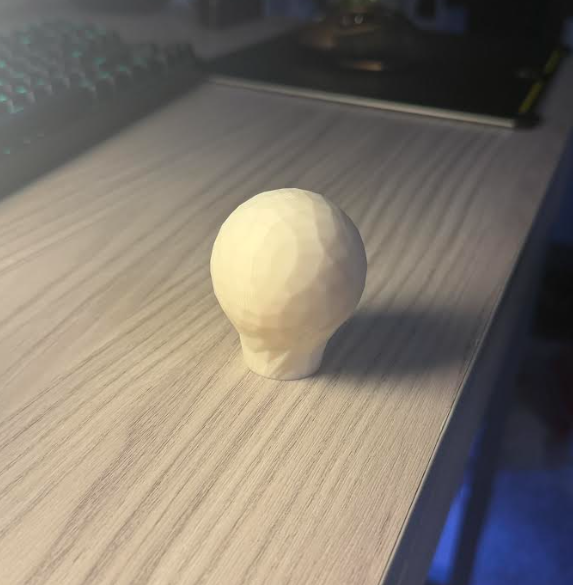
- An adjustable shift knob of 57-150 grams, offering both a super lightweight and heavyweight feel
Weight adjustable shift knob
The shift knob project started from a problem I kept running into. Light shift knobs feel great on track or on a canyon run, but they're annoying for daily driving. Heavy shift knobs are better for daily driving, but they add unnecessary wear on the throwout bearing and the rest of the shift linkage. Rather than just swapping knobs depending on the day, I wanted to design a single knob that could do both, using one base and one exterior design but two different effective weights.
I began with a standard shift knob and base. The base has a threaded insert sized for M12x1.25, matching my car's shifter thread. I made the base out of 6061 aluminum, chosen specifically because it's lighter and less dense than stainless steel, which was the main alternative I considered.
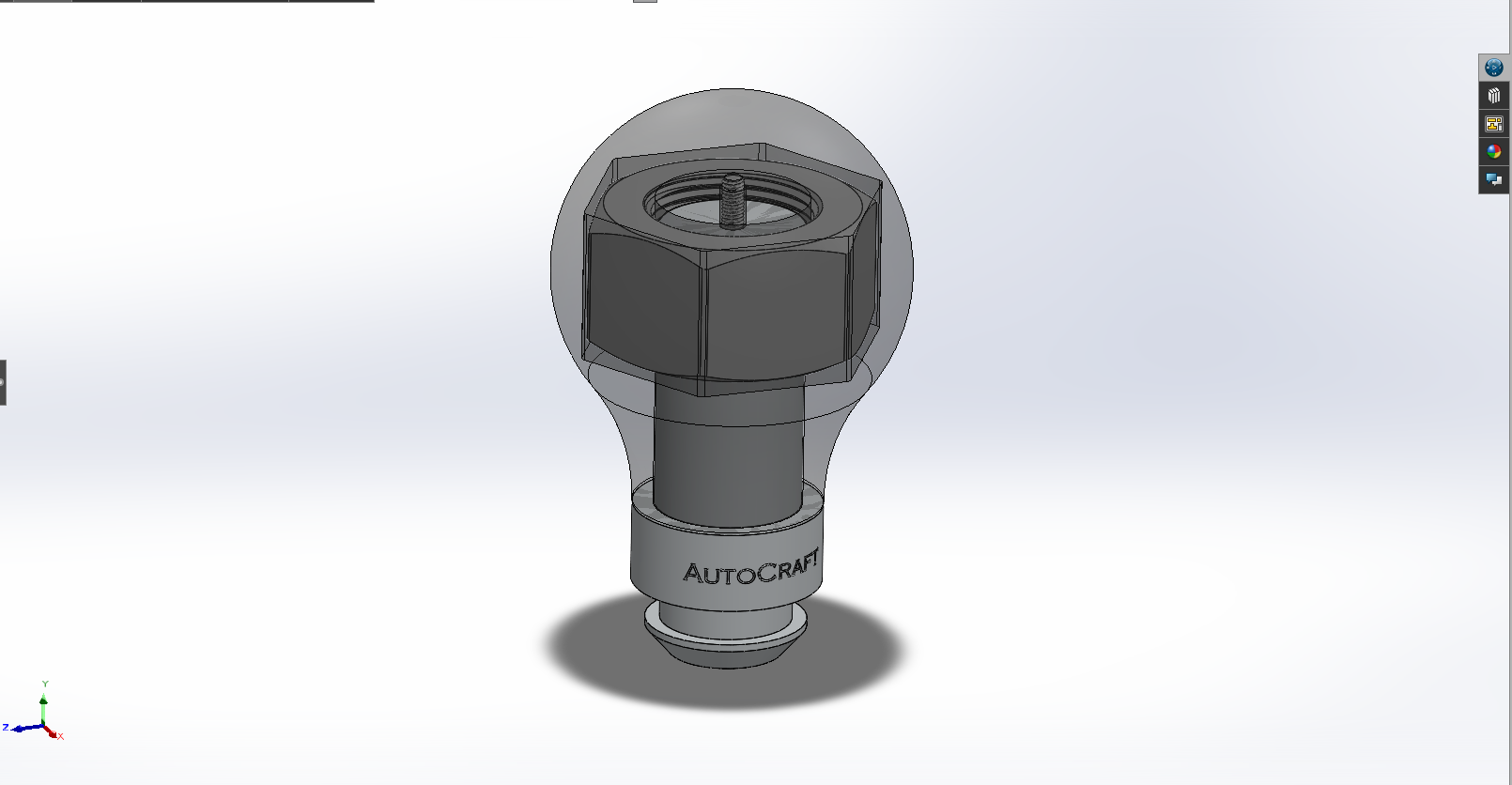
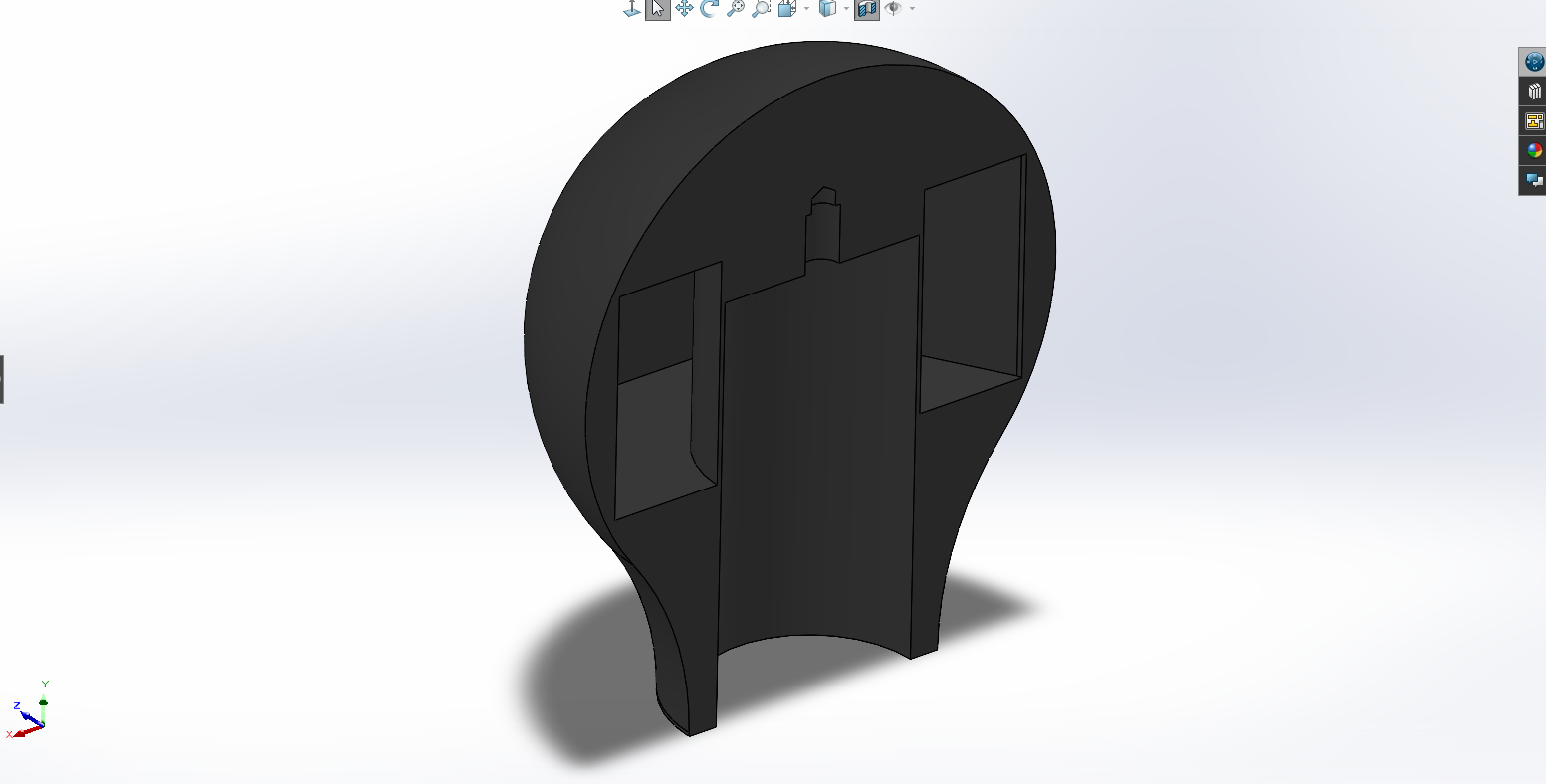
From there, I modeled the knob handle in CAD with two internal designs: a solid version, and a version with a false bottom, similar to a hidden compartment inside a shelf. Inside that cavity, I placed an M24 steel nut weighing over 80 grams, which shifted the knob's overall weight dynamic toward the heavier end, ideal for daily driving, without changing anything about the exterior design.
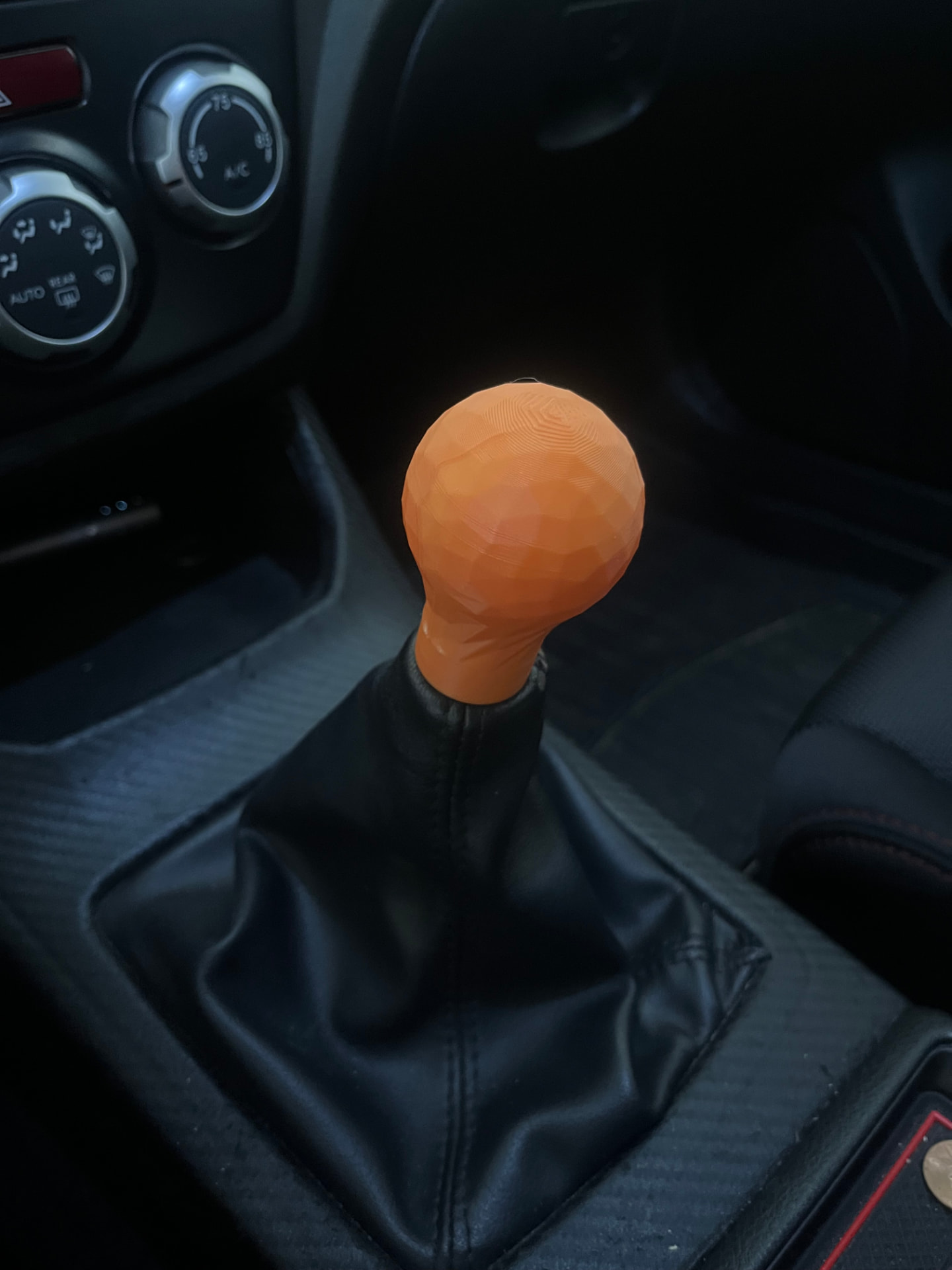
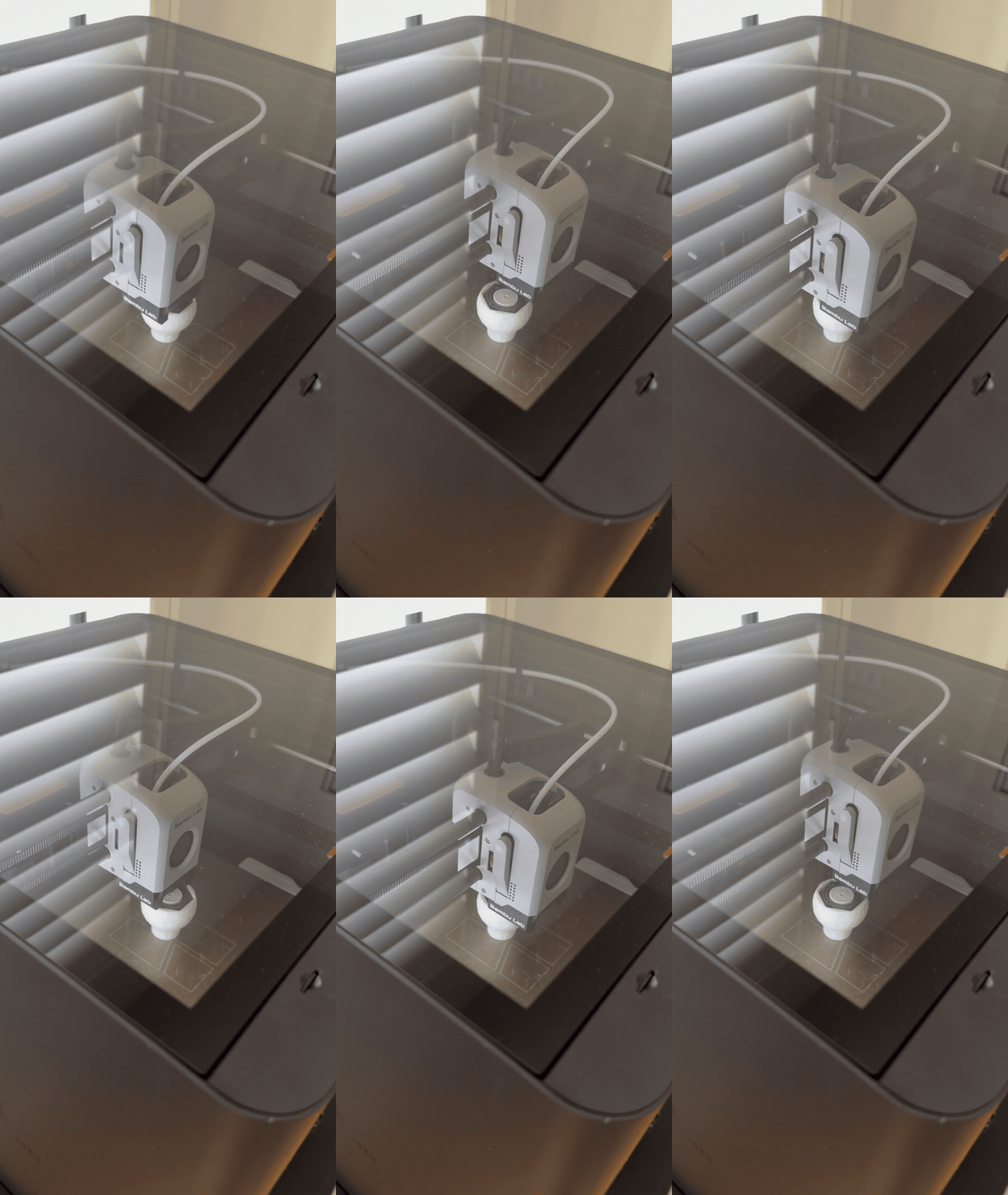
Once the CAD and first prototype checked out, I moved into manufacturing. I turned the aluminum base on a lathe, and the knob body itself was 3D printed in ASA filament. I chose ASA over PETG for its higher heat resistance and lower thermal conductivity, so the knob stays cooler on hot days with direct sun through the windshield, and so the heat doesn't transfer as much into the aluminum base underneath.
For the exterior design, I brought a STEP file from SolidWorks into Meshmixer to decimate the mesh, reducing it from millions of triangles down to around 500. That was enough to preserve the shape of the knob while cutting out unnecessary geometry and weight. From Meshmixer I exported an STL for printing.
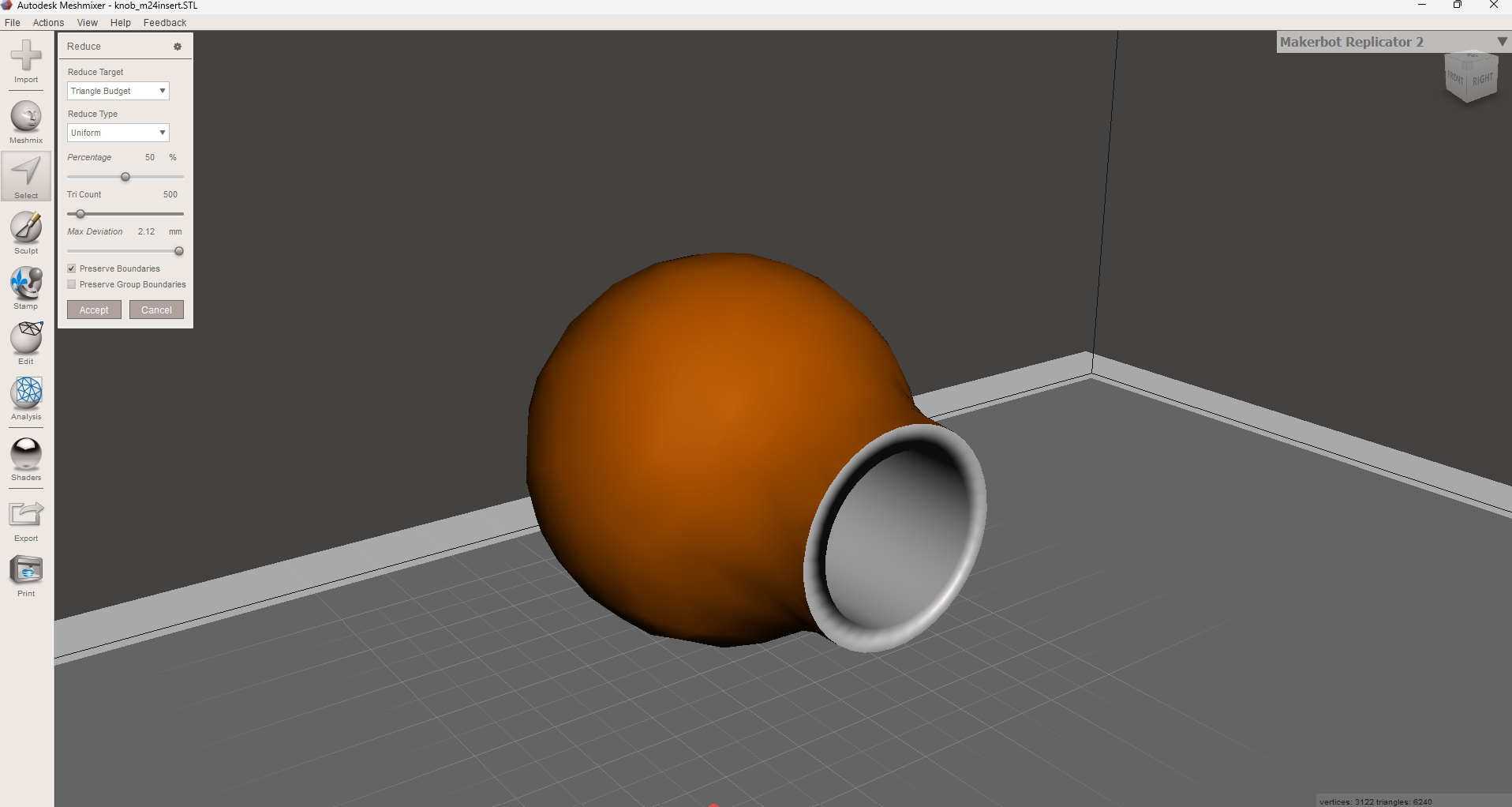
Embedding the steel nut inside the print was the trickiest part of the process. I paused the print partway through, inserted the nut, and resumed. Timing mattered: I had to let the nut cool close to 100°C before restarting the print, and since the nut came from McMaster-Carr with a black oxide coating and residual lubricant, I had to sand it down first or the filament wouldn't bond to it. It took several attempts to get the sequence right.
The knob also uses a printed insert melted into the top, so the exterior can be swapped without touching the base. Since the base and thread stay the same, the design supports an unlimited number of interchangeable tops. Instead of buying a whole new knob for a different look, someone could just print a new top and reuse the same base, which could make it a fairly affordable option for people who want to run multiple designs.
The knob is currently in testing, mounted on my car and in daily use. Going forward, I want to test other filament types and eventually scale up manufacturing, with the goal of publishing the design and getting it into a few friends' hands to see how it performs.
Gallery